One of the hottest topics in Japan's political scene right now is whether tearing down the national flag should be a crime.
Since December, the Liberal Democratic Party, Nippon Ishin, and Sanseito have been pushing for a Criminal Code amendment. The plan is to introduce a new crime called "disrespect to the flag of Japan" – basically making it illegal to intentionally damage or deface the Hinomaru. The punishment can be as severe as two years in prison or a fine of 200,000 yen.

Currently, Japan's criminal code only covers "insulting a foreign flag." Burning the Stars and Stripes or tearing the French tricolor could land you in court. But using Hinomaru as a cloth or cutting it into pieces? This is not a crime. This strange "protect foreign flags but not our own" setup dates back to the post-war GHQ era, when Japan was being stripped of militaristic symbols. For conservatives, it has been a sore spot for more than 70 years.
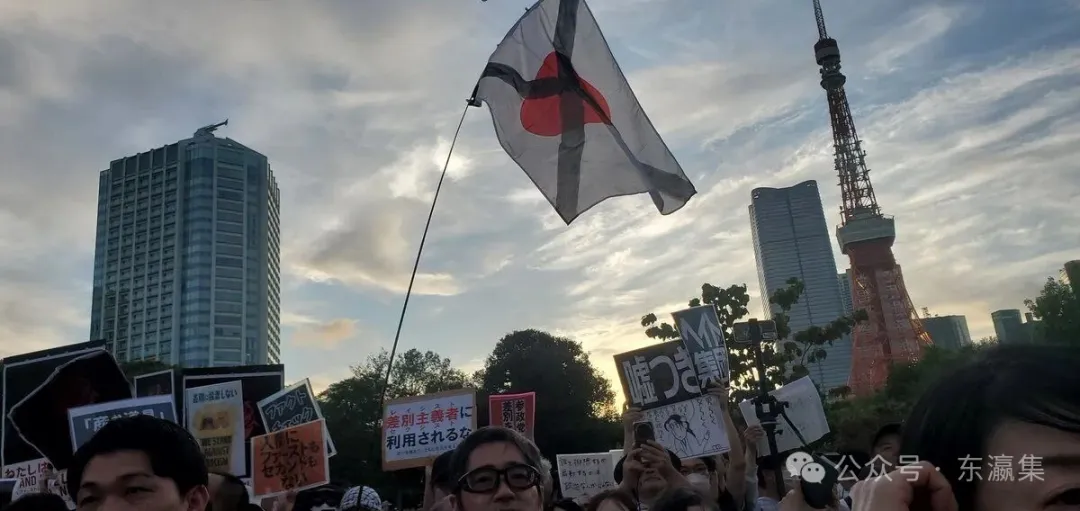
During the summer 2025 upper house elections, Sanseito leader Sohei Kamiya delivers a speech on the street. Protesters waved Hinomaru marked with a red X. That moment lit a fire among conservatives. Kamiya announced on the spot that such an "insult to the nation" would have consequences.
Right after the election, Sansito introduced a bill in the upper house. It was the first time in Japan's history that a small party independently submitted flag protection legislation.
The driving force behind this pressure is Prime Minister Sanae Takaichi. In 2012, when the LDP was in opposition, he led a similar bill. It failed only because Parliament was dissolved.
Takaichi once wrote on his personal site: "The flag has dignity protected by countless lives. To damage it is to crush people's feelings." Critics criticized him for "emotional law". He quietly deleted the post, but the feeling never left him.
Now that he is the Prime Minister, times are different. LDP needs Ishin and Sensito to keep the alliance alive. So the flag desecration law was written into the October three-party agreement, becoming Takachi's first major political move in office.
Numbers matter here. In the lower house, the LDP has 261 seats, Ishin has 44, and Sensito has 3 – a total of 308, well above the 238 needed for a majority. In the Upper House, the three parties together have 152 seats, easily crossing the limit of 125. If they remain united,d then it seems almost certain that the bill will be passed in 2026.
But the opposition is fierce. Constitutional scholars argue that this clearly violates freedom of speech. Article 21 of the Constitution of Japan protects speech. Yasuo Hasebe, professor emeritus at the University of Tokyo, put it bluntly, "Criminalizing political opposition is like putting shackles on dissent."
Lawyers worry that the terms are too vague and open to abuse. The phrase "with the intention of insulting Japan" is difficult to say. Does burning the flag during protests against foreign military deployments count? How about a manga artist parodying Hinomaru? The Japan Federation of Bar Associations has already expressed strong opposition.
Even within the LDP, some diplomats are concerned about optics abroad. "If you need criminal law to protect your flag, doesn't that make you look weak?" An insider joked. He argues that the real priority should be protecting the lives of citizens, not a piece of clothing.
People online are also joking. "Will anime creators be detained by police if they create flag-tearingng scene?" one commenter quipped.
On the surface, this seems like fixing a legal gap. But it's actually part of Japan's broader conservative shift. In just two months, Takachi's government has already enacted legislation limiting defense spending to 2% of GDP and legalizing capabilities to attack enemy bases. Now comes the protection of the flag. Each step moves Japan closer to becoming a "normal nation, while also testing the limits of free speech. When a country starts using criminal law to protect "national sentiments" instead of trusting citizens to respect symbols, it is a troubling sign.
When Parliament reconvenes in 2026, the debate over whether you can tear the flag will be much more than a legal battle. It will be a mirror that reflects where Japan is headed.