Prime Minister Sanae Takaichi's government is moving to tighten rules for foreigners seeking Japanese Nationality, Japanese media reports said. The biggest change? The current “5 years of continuous residence” requirement will be interpreted more strictly, effectively pushing it closer to 10 years, which will match the permanent residence deadline.
In other words, becoming a Japanese Nationality will no longer be as simple as living in the country for five years. Applicants may need a full decade, perhaps even more, like those applying for permanent residence.

Why the sudden change?
Over the years, critics pointed out a peculiar flaw: Citizenship was easier to obtain than permanent residence. Under current law:
- Naturalization: 5+ years of continuous residence
- Permanent residence: usually 10+ years, plus good behavior and a solid tax record
This "adverse situation" made citizenship an easy option, which conservatives called a flaw in national policy.
In April 2025, Prime Minister Takachi asked Justice Minister Hiraguchi to begin tightening the rules. By August, a policy study group led by former Justice Minister Suzuki stated categorically that the requirements for naturalization were too generous compared to permanent residence.
Then there were the Upper House elections in July 2025, where conservative parties campaigning on "Japan First" won a landslide victory. Public frustration is at its peak over unpaid taxes, overdue health insurance, and visa overstays. The government responded by promising a safer, more ordered society, making stricter citizenship rules the most direct step.
Key changes coming
1. Residency stretched to about 10 years
The law will not be immediately rewritten, but the Justice Ministry will tighten its interpretation of the "5 years" rule. Examples include:
- Time spent as a student or technical trainee will not count towards lawful residence
- A long absence from Japan can completely reset the clock
2. Taxes and social security as deal-breakers
In the past, minor delays in payments could be detected and corrected. Going forward, willful non-payment of taxes, health insurance, or pension contributions will mean automatic rejection.
3. Stricter conduct checks
Even minor traffic violations or administrative penalties can now be flagged as "bad behavior."
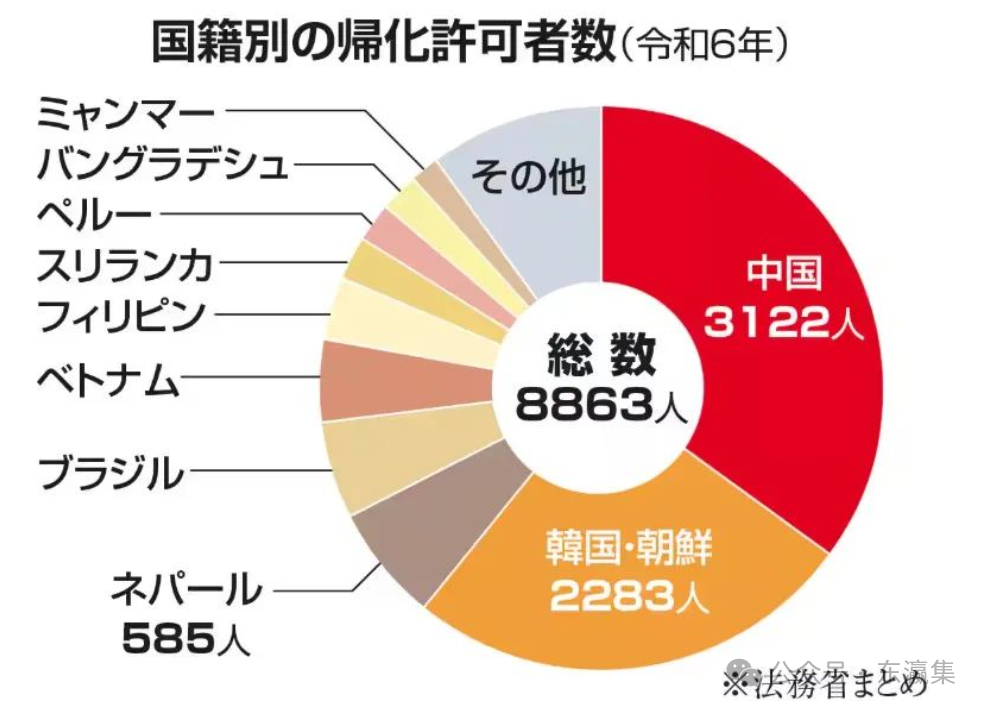
2024 Naturalization Data (Justice Ministry)
- Applications: 12,248
- Approved: 8,863 (including 3,122 born in China)
- Denied: 639
Approval rates are expected to decline rapidly after 2025.
Timeline
Its earliest implementation could be in January 2026, when Japan will unveil its new comprehensive foreign policy. That's when stricter naturalization standards are expected to officially take effect.
For anyone planning to apply, this is the biggest change to citizenship policy in two decades. If you have been living in Japan for less than 8-9 years, it would be wise to talk to a licensed immigration specialist to see if you can still get there under the old rules. If you are already close to 10 years old, the effect may be less.
Japan isn't closing the door on citizenship, but it's certainly making it heavy, narrow, and slow to open.