Japan's Cabinet Office has released the latest data on prefectural GDP, giving us a clear picture of how the country's regions are faring. This year's list includes 40 prefectures, while Fukui, Nara, Tochigi, Tokushima, Nagano, Shizuoka, and Kagawa were omitted due to missing data.
(Unit: million yen)
| Rank | Prefecture | GDP |
| 1 | Tokyo | 120,219,929 |
| 2 | Osaka | 43,124,192 |
| 3 | Aichi | 43,083,104 |
| 4 | Kanagawa | 35,159,372 |
| 5 | Saitama | 24,665,567 |
| 6 | Hyogo | 23,462,649 |
| 7 | Chiba | 21,414,302 |
| 8 | Hokkaido | 20,889,250 |
| 9 | Fukuoka | 20,187,168 |
| 10 | Ibaraki | 14,585,606 |
| 11 | Hiroshima | 12,476,116 |
| 12 | Kyoto | 11,107,553 |
| 13 | Gunma | 9,762,017 |
| 14 | Miyagi | 9,614,668 |
| 15 | Niigata | 9,042,891 |
| 16 | Mie | 8,490,601 |
| 17 | Gifu | 8,225,187 |
| 18 | Fukushima | 7,864,963 |
| 19 | Okayama | 7,344,951 |
| 20 | Shiga | 7,005,956 |
| 21 | Kumamoto | 6,565,053 |
| 22 | Yamaguchi | 6,306,247 |
| 23 | Kagoshima | 6,048,596 |
| 24 | Ehime | 5,138,119 |
| 25 | Toyama | 4,927,629 |
| 26 | Oita | 4,900,706 |
| 27 | Iwate | 4,797,050 |
| 28 | Ishikawa | 4,717,260 |
| 29 | Nagasaki | 4,653,614 |
| 30 | Okinawa | 4,461,530 |
| 31 | Aomori | 4,439,055 |
| 32 | Yamagata | 4,340,427 |
| 33 | Wakayama | 3,996,073 |
| 34 | Miyazaki | 3,766,949 |
| 35 | Yamanashi | 3,715,030 |
| 36 | Akita | 3,629,335 |
| 37 | Saga | 3,148,889 |
| 38 | Shimane | 2,752,746 |
| 39 | Kochi | 2,407,441 |
| 40 | Tottori | 1,912,211 |
Tokyo Tops the GDP List
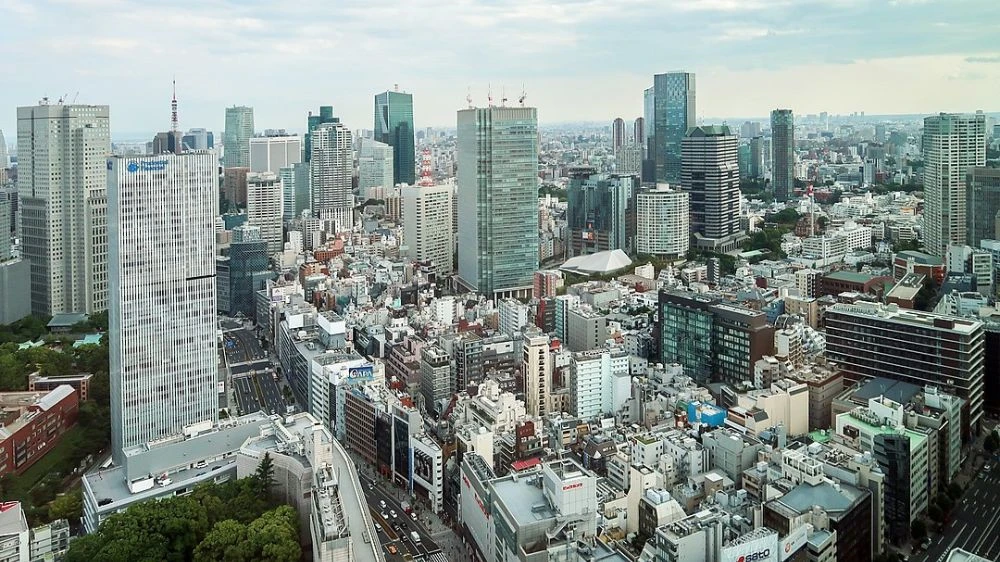
No surprise here—Tokyo leads the way with a GDP of 120,219,929 million yen. This is almost three times the size of Osaka (43,124,192 million yen) and Aichi (43,083,104 million yen). The numbers make it crystal clear: Tokyo remains the heart of Japan's economy.
An interesting detail is the decreasing gap between Osaka and Aichi. Although the ranking has not changed from last year, Aichi is moving closer to Osaka. It's worth keeping an eye on if that rivalry shakes up the list in the future.
Tottori Sits at the Bottom
In contrast, Tottori has the lowest GDP at 1,912,211 million yen. Analysts point to factors such as a growing population, fewer working-age residents and a lack of key industries that could drive growth. Together, these challenges keep the prefecture's economy small compared to the rest of Japan.