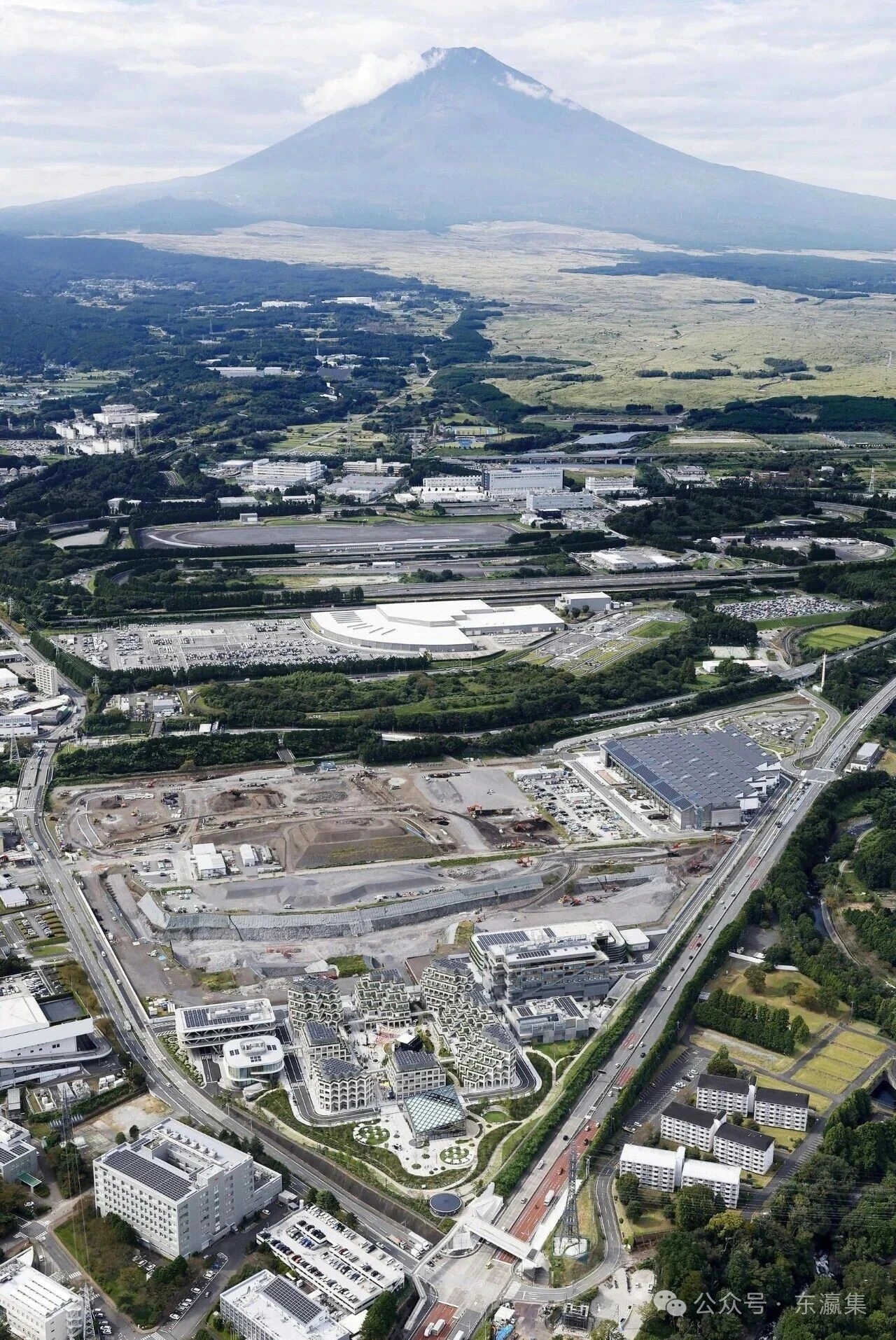
Toyota has officially opened the first phase of its bold experiment in central Japan – a futuristic “living city” called Woven City, located just beneath Mount Fuji in Shizuoka Prefecture. A handful of residents have already moved in, and about 300 people associated with Toyota are expected to join them soon. What makes this place different? It is filled with autonomous cars, delivery robots, and personal mobility devices that meet everyday needs. For an automaker, it's very rare to build a city like this.
The site will eventually span approximately 294,000 square metres, with more than 2,000 Toyota-related residents expected to live there. Starting from the 2026 financial year, the city will also welcome the general public.
At the launch ceremony, Daisuke Toyoda, son of Toyota Chairman Akio Toyoda and senior vice president of Woven by Toyota Inc., shared his vision: "I hope to connect social infrastructure with mobility to create a safe and reliable society."
The test site includes roads specifically built for autonomous vehicles as well as traffic lights equipped with sensors and cameras. Officials said these systems allow Toyota to test technologies that cannot be easily tested on public roads due to legal restrictions.
Think of the Woven City as a “living laboratory.” It is designed to explore how infrastructure and vehicles can work together for seamless, safe driving. For example, traffic signals can change timing in real time based on the flow of pedestrians and cars.
There is also an underground road network, providing engineers with a controlled environment free from the interference of sunlight or dust – perfect for testing autonomous driving systems.
Toyota is not doing this alone. The company has teamed up with seven partners outside the auto industry, including Nissin Foods Holdings, education platform operator Zoshinkai Holdings Inc., appliance maker Daikin Industries, and rocket startup Interstellar Technologies Inc.
For example, Nissin Foods is considering opening a restaurant inside the city, where meals can be customized based on the age and gender of the diner.
This all ties into Toyota's larger effort to re-establish itself as a mobility company. In the age of connected cars, autonomous driving, ride-sharing, and EVs, automakers are placing more emphasis on software development than ever before.
Still, not everyone is convinced. Critics are concerned about the large amounts of personal data collected through sensors and devices. Privacy and security remain major obstacles for smart cities to achieve full adoption.
Akio Toyoda first revealed plans for the Woven City in early 2020, just before the Consumer Electronics Show in Las Vegas. Now, years later, that dream is finally coming true at the foothills of Mount Fuji.