When Chinese citizens naturalize in Japan, many decide to change their surname. The Osaka Judicial Clerk Office recently ran a survey with 107 naturalized Chinese residents, asking a simple question: "What surname did you choose after becoming Japanese?"
Did he change his name?
· Yes, changed my surname…74.8%
·No change…16.8%
・Not changed at first, but later changed through Family Court…8.4%
Therefore, the majority went ahead and chose a new Japanese surname. Some did not change it immediately but went through the Family Court later. That process requires a “compelling reason” to be approved.
Which nicknames were chosen?
Among the 89 people who changed their names, details of the choices are as follows:
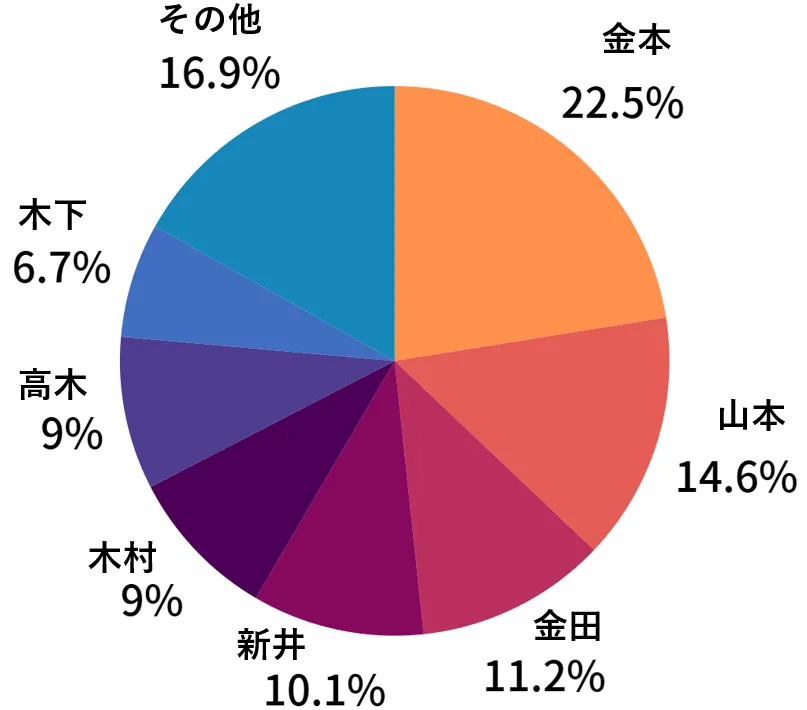
・Kanemoto…22.5%
・Yamamoto…14.6%
・Kaneda…11.2%
・Arai…10.1%
・Kimura…9%
・Takagi…9%
・Kinoshita…6.7%
・Other surnames…16.9%
Even though the sample size was small, Kanemoto came out on top. Other names revealed include Shirakawa, Hata, Tanaka, Takano, Kato, Yamada, Takeda, and Sera.
What if they don't change their surname?
The survey also asked 27 people who kept their original Chinese surnames whether they had faced discrimination. Names like "Wang" or "Zheng" are instantly recognizable as Chinese, so the question was whether this led to negative attitudes.
Here's what he said:
· Quite a lot…7.7%
·Some…69.2%
・Not at all…23.1%
Sadly, more than 70% reported facing discrimination because of their surname. This shows how important a name can be in Japanese society, especially for naturalized citizens dependent on recognition and acceptance.