In a rare move, Tokyo's High Court has overturned a lower court's decision in a case that shocked many. A Nepali man died in 2017 after police tied him up with multiple restraint devices—belt handcuffs, a grab rope, and more, cutting off his blood flow. His family filed a lawsuit for compensation against both the Japanese government and Tokyo authorities. On December 19, the High Court announced its decision.
Only ¥1 million was awarded in the first trial. The appeal changed everything, increasing the payment to approximately 39.4 million yen – almost the entire amount sought by the family.
Ryutaro Ogawa, a lawyer representing the family, told reporters after the verdict: "This is basically a complete victory."
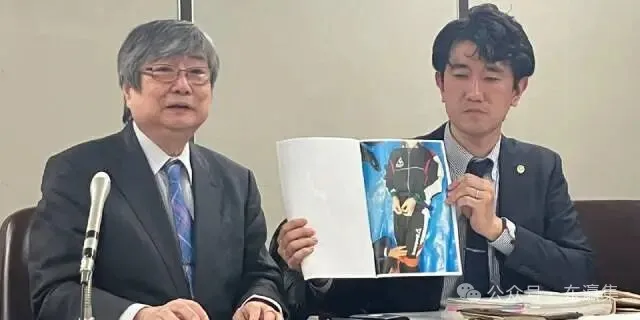
Restrained with Three Devices at Once
On March 13, 2017, Nepalese national Arjun Bahadur Singh was arrested in Shinjuku for possessing a lost credit card. Two days later, at 6:30 in the morning, the police accused him of being "uncooperative" because he had not folded his bed properly. Sixteen officers forced her into a holding room and bound her wrists, knees, and ankles with three restraints—belt handcuffs, a grab rope, and ropes.
By 9 a.m., his knees and ankles were still bound. Only his wrist shackles were replaced with standard handcuffs before he was taken to prosecutors.
At 11 am, during questioning, a prosecutor removed one side of his handcuffs. Arjun suddenly leaned backwards and became speechless. Restraints were immediately removed, and CPR was attempted, but he was pronounced dead at a hospital at 2:47 p.m.

First Trial Awarded Only ¥1 Million
His widow filed a lawsuit in 2018, seeking approximately 61.8 million yen, arguing that improper restraint and release directly caused his death. In March 2023, the Tokyo District Court recognized only Tokyo's responsibility and awarded only 1 million yen. The court held that the violation was due to the failure to send him to the hospital quickly, not excessive restraint.
The following award was based on Japan's National Compensation Act Article 6, which requires "reciprocity". In short, if a foreigner sues Japan, compensation is only recognized if their home country offers the same rights to Japanese citizens. The court held that Nepal's Torture Compensation Act applied, but argued that the payment was capped at ₹100,000 (approximately ¥100,000). Tokyo claimed that in practice, ¥1 million was the maximum, so Japan could only give that amount.
High Court Rejects That Logic
The High Court rejected this argument, noting that the legal systems differed too much to be directly compared. It states that strict reciprocity would undermine international human rights protections. Judges refused to mechanically enforce Nepal's borders.
Lawyer Kazuto Kawakami called the lower court's approach "unheard of." Lawyer Yuichi Kaido said, "The district court's decision was incomprehensible. The High Court brought things back to normal."
Judge Tested the Restraints Himself
In a rare move, one judge personally tried on the same belt handcuffs. At the sixth notch, the pain was already severe. Arjun had been strapped at the seventh notch—clearly excessive.

The court ruled that even if restrictions were loosened and needed to be tightened again, police should avoid cutting circulation. The Tokyo police failed in that duty, and their actions directly led to Arjun's death. The judges accepted the claim that muscle damage caused by restraints released potassium into his blood, triggering fatal hyperkalemia.
Restraint Abuse Isn’t Limited to Foreigners
Lawyers stressed that cases of restraint abuse are not rare in Japan and do not only involve foreigners. In December 2022, a 40-year-old Japanese man in Aichi, tied with belt handcuffs and ropes for more than 140 hours without food or water, died of kidney failure. In July 2022, another man in Shinjuku was bound and gagged, nearly naked, and forced to defecate while still tied.
Kawakami warned: "Once the police deem someone a protester, they often use restraints as punishment. Arjuna's death was a result of that habit."
After the verdict, Arjun's wife thanked his supporters. The legal team also expressed gratitude to the court and to the late Dr. Yoshitaka Fushimi, a former Tokyo medical examiner, whose expert opinion was vital.